Showing posts with label family health. Show all posts

Friday, 26 August 2011

PREVENTING BAD BREATH


BY Dr. Angelo V. Fernandez, DMD, FICD


Bad breath, or halitosis, as what dentists normally call it, is a condition described as breath with unpleasant odor that causes embarrassment. With 85 to 90 percent of all the causes originating from the mouth itself (bacteria that live in the mouth are the primary causes of bad breath), bad breath affects a significant number of people.


Common causes

Some people with bad breath are not even aware that they are suffering from this condition; it is because the odor-detecting cells in our nose eventually become accustomed to the constant flow of the bad smell in the mouth. The following are the most common causes of bad breath:

• POOR ORAL HYGIENE: infrequent and improper tooth brushing and flossing can leave food debris to decay inside the mouth, giving off the characteristic of rotten egg smell.

• TOOTH DECAY: Bacteria-caused tooth decay is an important causative agent of bad breath. The bacteria have a putrefactive or rottening action on the mouth leading to its demineralization.

• DRY MOUTH: When there is a reduction or absence of saliva in the mouth, it leads to accumulation of plaque, favoring bacterial growth and bad breath. Mouth breathing is also one of the causes of dry mouth.

• SYSTEMIC ILLNESSES OR MEDICAL DISORDER: Local infection in the respiratory tract, chronic sinusitis, post nasal drip, diabetes, gastrointestinal disturbance, liver or kidney dysfunction, and chronic bronchitis are possible causes.

• SEVERE DIETING: This causes bad breath due to ketoacidosis from prolonged starvation.

• EXTERNAL AGENTS: What you eat affects the air you exhale. Avoid eating certain foods like garlic, onions, coffee, and chewing tobacco.

• SMOKING: Smoking causes ‘smoker’s breath’ which is due to the accumulation of nicotine, tar, and other foul-smelling substances in the mouth.

• INFECTION OF THE MOUTH: Gum and periodontal diseases, oral cancer, and oral lesions are few examples.


Prevention

Bad breath can be prevented easily. Eat a well-balanced diet. Proper dental care should be observed by brushing your teeth, tongue, and gums; floss at least twice a day and rinse with mouthwash, so that food debris would not remain in the mouth. We can prevent dry mouth by increasing our fluid intake and chewing sugar-free dental health gum with xylitol that stimulates the flow of saliva and helps prevent dental cavities. Eat foods that keep breath fresh and prevent plaque from forming like raw carrots and celery.

Stop smoking, ask your dentist for tips on how to kick the habit. Smoking also interferes with the normal functioning of the cells in the gum tissue. It is also associated with lung cancer, but another major bad effect of smoking is “oral cancer.” Periodontal disease or gum problem also responds quickly to proper dental treatment, so visit your dentist’s at least twice a year. Dental caries should be restored immediately through dental filing, in some severe cases root canal treatment is an alternative procedure. If left untreated, it may lead to tooth loss.

Bad breath caused by systemic illness may be a long-term problem that can also be controlled with proper medical care. Once bad breath has been diagnosed, the expectation for fresh breath is usually excellent as long as you follow your dentist’s or physician’s treatment plan.


About the speaker/author:

Dr. Angelo Fernandez, DMD, FICD, is the Chairman of the Philippine Dental Association Committee on Dental Public Health 2011.  Click on www.pda.ph.

Friday, 19 August 2011

Doctors explain cause of brain-eating amoeba

ST. BERNARD, La. -- It's taken the life of a 16-year-old girl in Florida after she swam in a river and a 9-year-old boy in Virginia after he was dunked in water at a fishing camp.

Now the mother of a young college student from St. Bernard Parish talks about the loss of her son from a deadly brain-eating amoeba.

The victims who have died of this rare infection include a Florida teen. The amoeba could have entered her body when she swam in a river near her home. She first had high fever, a headache and threw up 20 times.

Another case was the boy from central Virginia. He was dunked at day camp the first day.
Now this rare infection by an amoeba has also taken a life here at home. Patrice Cusimano remembers her only child.
"He had some very definite opinions about some things, but he was very kind. He was a sweet boy and I was very happy to see the comments (on the obit blog) that people made about him, about how kind he was, because to me that meant more than anything that he was kind to people. He was very much like my dad," said Cusimano.

Jeffrey Allen Cusimano of Arabi was 28 when he died on June 7 after the amoeba apparently entered his brain by contaminated tap water that unknowingly was in the neti pot he used to clear his sinuses.

A neti pot is small and shaped like a tea pot. It's used to rinse out the nose and sinus cavities with salt water to help people suffering from colds, sinus infections and allergies.

"Around 4:00 in the morning, I started hearing him taking showers like repeatedly, he would take a shower and then go lay down and take a show and go lay down and at some point I got up to check and I realized he was burning up with fever," his mother remembers.

State health officials say the organism was found in the shower head in his home. It was also in the hot water heater. But they say it was isolated to that home and the water supply was checked and not contaminated.

First symptoms include headache, fever, nausea, vomiting and a stiff neck. Later symptoms include confusion, attention loss, loss of balance, seizures and hallucinations.

That's exactly what happened to Jeff.
"At this time he was disoriented. He didn't know his social security number. He had started walking around the house about getting dressed, going to take a shower in his bedroom, and just acting very erratic," Patrice Cusimano said, crying.

Jeff graduated from Holy Cross High School with honors. He had plans, graduating from UNO this year with future MBA and law school hopes. He was enjoying a life in the hotel industry working at the Ritz.

But Patrice knew when the ICU doctor called from Ochsner Baptist Medical Center, those plans would never happen.

"The doctor called and asked me if I could come right back because he was deteriorating, and I knew I was going to lose him," she said. "So from Saturday to Tuesday, he was gone."
Only 120 people have died from this amoeba since it was found in the 1960s.

It usually happens to children after water is pushed up their noses from jumping in to water in lakes, ponds and rivers. People can swallow this organism and be fine, but for some when it gets lodged up in the nose, it goes to the brain and consumes it as its food.

"We see it late in the summer -- August, September -- and the organism invades the body," said Dr. Jim Diaz, of the LSU Health Sciences Center's School of Public Health. "Its infectious form is a cyst that's microscopic, and it invades the body through the nose. So the cases we've seen have been cases where people have been wake boarding or water skiing or doing something in fresh water -- diving, swimming under water a lot."

To protect yourself from this rare infection, use a nose clip or hold your nose when jumping into lakes and rivers. In neti pots, use only sterile or distilled water, or water that has been boiled and cooled.

wwltv.com

Wednesday, 10 August 2011

10 health benefits of stopping smoking

Many of us still didn't realise the benefits of not smoking.  Most of us still choose to be a smoker even though many Bad article about smoking has been produced. Why does it happen? Is it because they not afraid of being sick? For me, i think it is more meaningful if we motivate them rather than blame them. So today, i will share about the benefit of not smoking. Enjoy!! 

Smoking’s bad for your health, but exactly how does quitting make life better?

Better sex
Stopping smoking improves the body’s bloodflow, so improves sensitivity. Men who stop smoking may get better erections. Women may find that their orgasms improve and they become aroused more easily. It’s also been found that non-smokers are three times more appealing to the opposite sex than smokers (one of the advantages, perhaps, of smelling fresh).
Find out more tips for having good sex.

Improved fertility
Non-smokers find it easier to get pregnant. Quitting smoking improves the lining of the womb and can make men’s sperm more potent. Becoming a non-smoker increases the possibility of conceiving through IVF and reduces the likelihood of having a miscarriage. Most importantly, it improves the chances of giving birth to a healthy baby.

Younger looking skin
Stopping smoking has been found to slow facial ageing and delay the appearance of wrinkles. The skin of a non-smoker gets more nutrients, including oxygen, and can reverse the sallow, lined complexion that smokers often have.
Watch this video to find out how smoking can ruin your looks.

Whiter teeth
Giving up tobacco stops teeth becoming stained, and you'll have fresher breath. Ex-smokers are less likely than smokers to get gum disease and lose their teeth prematurely.
Find out more about dental health.

Better breathing
People breathe more easily and cough less when they give up smoking because their lung capacity improves by up to 10% within nine months. In your 20s and 30s, the effect of smoking on your lung capacity may not be noticeable until you go for a run, but lung capacity naturally diminishes with age. In later years, having maximum lung capacity can mean the difference between having an active, healthy old age and wheezing when going for a walk or climbing the stairs.

Longer life
Half of all long-term smokers die early from smoking-related diseases, including heart disease, lung cancer and chronic bronchitis. Men who quit smoking by 30 add 10 years to their life. People who kick the habit at 60 add three years to their life. In other words, it’s never too late to benefit from stopping. Quitting not only adds years to your life, but it also greatly improves the chance of a disease-free, mobile, happier old age.

Less stress
Scientific studies show that people's stress levels are lower after they stop smoking. Nicotine addiction makes smokers stressed from the ‘withdrawal’ between cigarettes. The pleasant feeling of satisfying that craving is only temporary and is not a real cure for stress. Also, the improved levels of oxygen in the body means that ex-smokers can concentrate better and have increased mental wellbeing.

Improved senses
Kicking the smoking habit gives your senses of smell and taste a boost. The body is recovering from being dulled by the hundreds of toxic chemicals found in cigarettes.

More energy
Within 2 to 12 weeks of stopping smoking, the circulation improves. This makes all physical activity, including walking and running, much easier. Quitting boosts the immune system, making it easier to fight off colds and flu. The increase in oxygen in the body makes ex-smokers less tired and less likely to have headaches.

Healthier loved ones
By stopping smoking you'll be protecting the health of your non-smoking friends and family.
Passive smoking increases a non-smoker's risk of lung cancer, heart disease and stroke. Second-hand smoke makes children twice at risk of chest illnesses, including pneumonia, croup (swollen airways in the lungs) and bronchitis, plus more ear infections, wheezing and asthma. They also have three times the risk of getting lung cancer in later life compared with children who live with non-smokers.
Quitting is good for their health as well as yours.

 The quitting timeline
  • After 20 minutes your blood pressure and pulse return to normal.
  • After 24 hours your lungs start to clear.
  • After two days your body is nicotine-free and your sense of taste and smell improve.
  • After three days you can breathe more easily, and your energy increases.
  • After two to 12 weeks, your circulation improves.
  • After three to nine months coughs, wheezing and breathing improves.
  • After one year your heart attack risk is  half that of a smoker.
  • After 10 years your lung cancer risk is half that of a smoker.


Sources : NHS

Tuesday, 9 August 2011

Smoking in front of children can make them addicted to nicotine

Thursday, June 16th, 2011
 
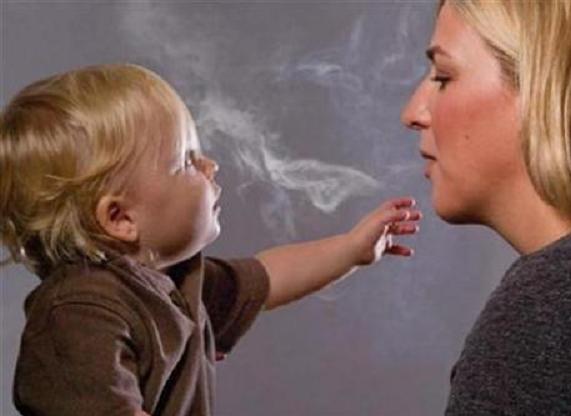
Most smokers are very aware of the damage they are doing to their own health – and know that others can also suffer though passive smoking. But a worrying new study reveals that smoking infront of children not only passes on the harmful effects of the smoke in the air – it can also get them hooked on cigarettes. A Concordia and University of Montreal study published in the Oxford journal Nicotine & Tobacco Research, found that tweens who repeatedly observe a parent, sibling, friend or neighbur consuming cigarettes are more likely to start smoking themselves.

‘Kids who see others smoking are more likely to take up the habit because they don’t perceive cigarettes as unhealthy,’ says lead study author Simon Racicot, of Concordia University’s Department of Psychology.

‘We found that kids who’d never smoked who were exposed to tobacco use were more likely to hold positive beliefs about the killer habit. These are the kids who are more likely to start smoking as teenagers.’

This new investigation builds on previous studies examining the negative effects of being surrounded by smokers.

Senior author Jennifer J. McGrath, a professor in the Concordia University Department of Psychology said around 60 per cent of children are exposed to secondhand smoke across North America.
‘Greater exposure to smokers is largely associated with greater exposure to nicotine,’ she said.
‘Children exposed to the same amounts of secondhand smoke as adults absorb higher doses of nicotine.
‘Early findings suggest that secondhand smoke exposure could possibly trigger addiction in the brain – before kids actually start smoking themselves.’

For the study, 327 11-13 year olds enrolled in French-language public schools were questioned about their smoking habits, the number of smokers in their entourage and the situations where they observed smoking.

‘Preteens who were surrounded by more smokers believed that there are greater advantages to smoking,’ says Racicot.

‘Therefore, smoking by parents, siblings, and friends increases risk factors for later smoking.’
The researchers argue that new prevention efforts must be tailored to children who are highly exposed to secondhand smoke – ensuring they are aware of the risks.

The general public also needs to be informed about how smoking around youth normalizes the dangerous habit.

‘When it comes to smoking around kids, the best thing a parent can do is to avoid exposing their kids to cigarettes and to secondhand smoke,’ says Racicot.

‘A parent should step outside of their home or car to smoke. And the addictive habit should remain out of sight, out of breath and out of mind.’

Monday, 8 August 2011

Goodness of MilK


Taken from Dutchlady.com.my


I am worried about the sugar level in my child’s Growing Up Milk

1. I didn't know that Growing Up Milk need to have sugars. Why?

First of all, we need to understand that children of growing up age needs some source of energy to help them grow. Main sources of energy are carbohydrates and fats. Carbohydrates are important, because it is the main source of energy which is needed for good growth and development of the body and the brain, especially for growing up children.

Sugars are a type of carbohydrates. Milk which is a natural product in itself also contains sugars known as lactose. It is this sugar (lactose) in milk which helps your child to grow. Therefore, all Growing Up Milk will contain some form of sugars.

2. Tell me about the sugars in Dutch Lady's Growing Up Milk.

First of all, at Dutch Lady Malaysia we have developed a well balanced formula which is optimal for growing up children in Malaysia. All Dutch Lady's Growing Up Milk products are fully in compliance with Malaysia's draft standard of Formulated Milk Powder for Children, Malaysia's Recommended Nutrient Intake (RNI) 2005 and World Health Organisation (WHO) 2003 recommendation.

There are two types of sugars most commonly found in Growing Up Milk powder. First, the naturally occuring sugars in milk which are called lactose. Second, there are added sugars which are natural plant sugars.

Dutch Lady's Growing Up Milk has a combination of lactose and added plant sugars. This is because, at Dutch Lady Malaysia we always strive to develop Growing Up Milk products which can help bridge the nutritional gap of the children. By providing an optimally and nutritionally balanced Growing Up Milk coupled with a healthy daily meal, it will help your child to achieve a nutritionally balanced diet which is important for his/her growth.

3. So, why does Dutch Lady need to have 'added sugar' in their Growing Up Milk powder ?


Dutch Lady's growing up milk is nutritionally designed using a combination of naturally occurring sugars in milk i.e. lactose and also added natural plant sugars in order to maintain the natural ratio of lactose in milk. Based on years of research, we found that it is important that our Growing Up Milk is optimally formulated. Our research reveals that products which are not optimally formulated, for example those with high lactose are not well tolerated by Malaysian children. Some children who consume high lactose milk may develop the following complications such as diarrhea, bloating (due to too much gas) as a result of the inability of their body to metabolise the excess lactose.

4. I am concerned about my child's sugar intake from his Growing Up Milk powder. How does the sugar content in Dutch Lady's Growing Up Milk compare with the other brands who claims 'no added sugar'?

Dutch Lady's Growing Up Milk has approximately 15% to 32% less total sugars (per 100g milk powder) versus brands who claims 'no added sugar'. In fact, the sugar levels in Dutch Lady's Growing Up Milk is well within the recommended Malaysian Recommended Nutrient Intake (RNI) 2005 level as well as within the World Health Organisation (WHO) 2003 recommendation.


Lactose and 'added sugar' which is the natural form of plant sugar, are all sugars.

Total sugar of Dutch Lady's Growing Up Milk product is approximately 15% to 32% less (per 100gm of milk powder) than brands who claim they have 'no added sugar'.


5. I read some brands that 'have no added sugar' implied that other brands like Dutch Lady have a lot of 'added sugar' in their Growing Up Milk and this is unhealthy for my child. Is this true?

Growing Up Milk brands that claim 'no added sugar' only talk about 'added sugar' (which we explained are plant sugars). However, they do not talk about the overall total sugar content in their milk. Parents should look at the total sugar content in their child's Growing Up Milk.

Total sugar includes both the naturally occurring sugar in milk which is lactose and the added natural plant sugars. Even though Dutch Lady's Growing Up Milk products has added natural plant sugars in our Growing Up Milk, our Growing Up Milk powder has a much lower total sugar content compared to brands who claim that they have ‘no added sugar’.

6. Is my child getting too much sugar from DL growing up milk?


Rest assured that your child is not getting too much sugar from our Dutch Lady's Growing Up Milk as all our Growing Up Milk products are made in full compliance with Malaysia’s draft standard of Formulated Milk Powder for Children, Malaysia RNI 2005 and World Health Organisation (WHO) 2003 recommendations.

7. In terms of sugar intake, what should I really be concerned about?

We understand that parents are worried about the effect of excessive sugar consumption in your child's diet which could lead to tooth decay, childhood obesity as well as diabetes.

If you are worried about this, apart from ensuring that your child minimise the intake of high in sugar food or snacks such as that occasional bar of chocolate, you will also will need to look at total sugar level in your child's Growing Up Milk and not the added sugar level.

There is no difference in terms of calorific value between lactose and other added natural sugars.

8. I came across a website in Malaysia where it provides a model to calculate sugar by looking at Carbohydrate content of Growing Up Milk's nutritional information. When I key in Dutch Lady's Growing Up Milk's carbohydrate content, your product would have 7-10 teaspoons of added sugar. Please explain.

We are not at liberty to explain how the website makes its calculation. We believe that possibly the calculation method is factually misleading.

In terms of total sugar content, Dutch Lady’s Growing Up Milk has approximately 15% to 32% less total sugars (per 100g milk powder) versus brands who claims 'no added sugar'.

9. Is Dutch Lady planning to reduce its added sugar in its Growing Up Milk products?

We firmly believe that the added natural plant sugars in our Growing Up Milk is necessary to ensure optimally balanced formulation so that it provides adequate carbohydrate (energy source) for a growing child. The level of the total sugars in our Growing Up Milk are not excessive. It is well within the recommended Malaysia Recommended Nutritional Intake (RNI) 2005 and World Health Organisation (WHO) 2003 recommendations.

Secondhand Smoke May Increase Risk for Nicotine Addiction

Wednesday, May 11th, 2011
 

Moderate secondhand smoke exposure results in occupancy of brain α4 β2 nicotinic acetylcholine receptors (nAChRs), which may increase vulnerability to smoking and nicotine addiction, new research shows. Study investigators found that after 1 hour of exposure to secondhand smoke in an enclosed space, a substantial amount of nicotine reaches the brains of nonsmokers and binds to receptors that are normally targeted by direct exposure to tobacco smoke — a finding that has important implications.

“We know that secondhand smoke exposure results in exposed individuals being more likely to become smokers and to have a harder time quitting smoking [if they are already smokers],” first author Arthur L. Brody, MD, from the Greater Los Angeles Veterans Affairs Healthcare System and the University of California, Los Angeles, told Medscape Medical News.
“Our study presents further evidence for the need to limit exposure to secondhand smoke in vulnerable individuals,” he added.

The study was published online May 2 in the Archives of General Psychiatry.

Priming the Brain
In laboratory rats, long-term exposure to cigarette smoke leads to nicotine dependence and an upregulation of nAChR levels in the brain. Yet, “brain nAChR occupancy from secondhand smoke exposure has not yet (to our knowledge) been demonstrated,” the researchers write.

In the study, 11 moderately dependent cigarette smokers and 12 nonsmokers underwent positron emission tomography with the radioligand 2-(18)F-FA-85380, which permits visualization of brain α4 β2 nAChRs, one of the most abundant nAChR subtypes in the brain.
Each participant underwent 2 scanning sessions during which they sat in the passenger seat of a car for 1 hour and were exposed to moderate secondhand smoke or to no secondhand smoke.

During the smoke exposure condition, the mean air carbon monoxide level was 7.4 parts per million (ppm) — significantly higher (P < .001) than during the control condition (0.5 ppm).
For the entire group (smokers and nonsmokers), moderate secondhand smoke exposure led to an average 19% brain α4 β2 nAChR occupancy, the researchers say.

Evidence Supports Public Smoking Ban

“These results show that even limited secondhand smoke exposure delivers enough nicotine to the brain to alter its function,” Nora D. Volkow, MD, director of the National Institute on Drug Abuse, who was not involved in the study, noted in a statement.

“Chronic or severe exposure could result in even higher brain nicotine levels, which may explain why secondhand smoke exposure increases vulnerability to nicotine addiction,” Dr. Volkow added.

The researchers also found that smokers had a 23% increase, on average, in craving with secondhand smoke exposure, and they saw a correlation between nAChR occupancy and craving alleviation with subsequent cigarette smoking. This finding suggests that moderate secondhand smoke exposure delivers a priming dose of nicotine to the brain that contributes to continued cigarette use in smokers, they say.

“This study,” Dr. Brody said, “gives concrete evidence to support policies that ban smoking in public places, particularly enclosed spaces and around children.”

Sources : Daily Mail

Friday, 5 August 2011

Wales could be the first to ban smoking in cars

WALES could be the first European country to ban smoking in cars carrying children, First Minister Carwyn Jones announced yesterday. Mr Jones said legislation could be considered if children’s exposure to second-hand smoke did not reduce as a result of a campaign. A ban would be designed first and foremost to protect children from second-hand smoke as well as encouraging adults to give up smoking, he said.
 
The First Minister said that it would be the next logical step following the ban on smoking in offices, pubs and restaurants.

He said: “Wales was the first UK country to vote in favour of a ban on smoking in public places and if necessary we will not shy away from considering the introduction of progressive legislation to further protect children from second-hand smoke.”

It was not entirely clear how any such move would be policed. Mr Jones told the Western Mail that no new road traffic offence would be created, although he suggested there was “plenty of scope for joint working” with the police.
Legislation will not be considered until the end of a three- year campaign warning drivers about the dangers to children in the car of lighting up while driving.
Mr Jones said: “Children are particularly at risk from second-hand smoke, especially in vehicles where a confined space means there is no respite from the harm of the toxic chemicals in cigarettes.

“Our manifesto committed us to take tough action to tackle inequalities in health, particularly the harm caused by tobacco use and its effect on children.
“The law already requires any vehicle that is used by more than one person in the course of paid or voluntary work to be smoke free and an extension is the next logical step.

“We will mount a renewed campaign to tackle smoking alongside other interventions such as quit programmes, but will consider pursuing legislative options if children’s exposure to second-hand smoke does not start to fall within the next three years.

“There is a growing public consensus on the social unacceptability of being exposed to second-hand smoke and introducing legislation would be a powerful statement of intent about our commitment to the health of our children,” he added.

Chief Medical Officer for Wales Dr Tony Jewell said: “Children are particularly vulnerable to the effects of smoking, and with no escape from second-hand smoke are more likely to develop long- term conditions such as asthma at an early age, which will affect them for their rest of their lives.”

The move from the Welsh Government comes less than two weeks after the British Medical Association called for drivers to be prevented from lighting up in their vehicles.

In June the BMA’s conference in Cardiff passed a motion calling for legislation to be introduced by all governments in the UK to tackle the issue of smoking while driving, to protect the health of other passengers and to increase the safety of other road users.

Delegates heard that smoking in a car was more damaging to a person’s health than breathing in exhaust fumes, because particle concentrations were 27 times higher than in a smoker’s home and 20 times higher than they used to be in a pub, when smoking was allowed.

That made it safer to have the exhaust pipe on the inside of the car than to smoke cigarettes in terms of fine particulate matter.

Research by the British Lung Foundation found that more than a third of children with a parent who smoked said the parent smoked in the car while the child is a passenger.

Friday, 3 June 2011

Hand washing: Do's and don'ts

Hi everyone. Today i wanna share with you an interesting article by Mayo Clinic staff about the guideline of how to wash your hands. Enjoy!!

Hand washing is an easy way to prevent infection. Understand when to wash your hands, how to properly use hand sanitizer and how to get your children into the habit.

By Mayo Clinic staff
Frequent hand washing is one of the best ways to avoid getting sick and spreading illness. Hand washing requires only soap and water or an alcohol-based hand sanitizer — a cleanser that doesn't require water. Find out when and how to wash your hands properly.

When to wash your hands


As you touch people, surfaces and objects throughout the day, you accumulate germs on your hands. In turn, you can infect yourself with these germs by touching your eyes, nose or mouth. Although it's impossible to keep your hands germ-free, washing your hands frequently can help limit the transfer of bacteria, viruses and other microbes.

Always wash your hands before:

  • Preparing food
  • Eating
  • Treating wounds or giving medicine
  • Touching a sick or injured person
  • Inserting or removing contact lenses

Always wash your hands after:

  • Preparing food, especially raw meat or poultry
  • Using the toilet
  • Changing a diaper
  • Touching an animal or animal toys, leashes or waste
  • Blowing your nose, coughing or sneezing into your hands
  • Treating wounds
  • Touching a sick or injured person
  • Handling garbage or something that could be contaminated, such as a cleaning cloth or soiled shoes

Of course, it's also important to wash your hands whenever they look dirty.

How to wash your hands


It's generally best to wash your hands with soap and water. Follow these simple steps:

  • Wet your hands with running water.
  • Apply liquid, bar or powder soap.
  • Lather well.
  • Rub your hands vigorously for at least 20 seconds. Remember to scrub all surfaces, including the backs of your hands, wrists, between your fingers and under your fingernails.
  • Rinse well.
  • Dry your hands with a clean or disposable towel or air dryer.
  • If possible, use your towel to turn off the faucet.

Keep in mind that antibacterial soap is no more effective at killing germs than is regular soap. Using antibacterial soap may even lead to the development of bacteria that are resistant to the product's antimicrobial agents — making it harder to kill these germs in the future. 

How to use an alcohol-based hand sanitizer


Alcohol-based hand sanitizers — which don't require water — are an excellent alternative to soap and water. If you choose to use a commercially prepared hand sanitizer, make sure the product contains at least 60 percent alcohol. Then follow these simple steps:

  • Apply enough of the product to the palm of your hand to wet your hands completely.
  • Rub your hands together, covering all surfaces, for up to 25 seconds or until they're dry.

If your hands are visibly dirty, however, wash with soap and water. Antimicrobial wipes or towelettes are another option, although they're not as effective as alcohol-based sanitizers.

Kids need clean hands, too


Help your children stay healthy by encouraging them to wash their hands properly and frequently. Wash your hands with your children to show them how it's done. To prevent rushing, suggest washing their hands for as long as it takes to sing the "Happy Birthday" song twice. You might place hand-washing reminders at children's eye level, such as a chart by the bathroom sink for children to mark every time they wash their hands. If your children can't reach the sink on their own, keep a stepstool handy.

Alcohol-based hand sanitizers are OK for children and adolescents, too, especially when soap and water isn't available. Make sure the sanitizer completely dries before your child touches anything. Store the container safely away after use.

Hand washing is especially important for children in child care settings. Young children cared for in groups outside the home are at greater risk of respiratory and gastrointestinal diseases, which can easily spread to family members and other contacts. Be sure your child care provider promotes frequent hand washing or use of alcohol-based hand sanitizers. Ask whether the children are required to wash their hands several times a day — not just before meals. Note, too, whether diapering areas are cleaned after each use and whether eating and diapering areas are well separated.

A simple way to stay healthy


Hand washing doesn't take much time or effort, but it offers great rewards in terms of preventing illness. Adopting this simple habit can play a major role in protecting your health.

Tuesday, 3 May 2011

7 Signs And Symptoms Not To Ignore

Another great articles by Mayo Clinic Staff that i wanna share with all of you. It is important for us to know this since we might having facing those symptom that we take it as granted. Enjoy!!

Take note of important signs and symptoms — from unexplained weight loss to sudden flashes of light — and know when to seek medical care.

By Mayo Clinic staff
Chest pain, sudden loss of vision or speech, and severe abdominal pain require immediate medical attention — but what about more subtle red flags? It can be tough to know what to do. Here's a list of seven signs and symptoms that merit attention.

No. 1: Unexplained weight loss

Losing weight without trying might sound like a dream come true, but in reality it can signal a health problem. If you've lost up to 10 percent of your weight during the past six months — for instance, 15 pounds (7 kilograms) if you weigh 150 pounds (68 kilograms) — consult your doctor.
An unexplained drop in weight could be caused by various conditions — including overactive thyroid (hyperthyroidism), diabetes, depression, liver disease, cancer or disorders that interfere with how your body absorbs nutrients (malabsorption disorders).

No. 2: Persistent or high fever

A fever isn't necessarily a cause for alarm. Fever seems to play a key role in fighting infection. If you've had a fever for more than three days, however, get checked by your doctor. Persistent fever can signal a hidden infection, which could be anything from a urinary tract infection to tuberculosis. In some cases, cancerous (malignant) conditions — such as lymphomas — cause prolonged or persistent fevers, as can some medications.
If you have a high fever — 103 F (39.4 C) or higher — consult your doctor as soon as possible.

No. 3: Shortness of breath

Shortness of breath that feels more severe than what's caused by a stuffy nose or vigorous physical activity could signal an underlying health problem. If you're unable to get your breath, or you're gasping for air or wheezing, seek emergency medical care. Feeling breathless when lying down also is a symptom that needs to be evaluated promptly.
Causes for breathlessness may include chronic obstructive pulmonary disease, chronic bronchitis, asthma, pneumonia, a blood clot in the lung (pulmonary embolism), as well as other heart and lung problems. Difficulty breathing can also occur with panic attacks — episodes of intense anxiety that can cause rapid heart rate, sweating, shortness of breath and other physical symptoms. 

No. 4: Unexplained changes in bowel habits

What's considered normal for bowel movements varies widely. Consult your doctor if you notice unusual or unexplained changes in what's normal for you, such as:
  • Bloody, black or tarry-colored stools
  • Persistent diarrhea or constipation
  • Unexplained urges to have a bowel movement
Changes in bowel habits could signal a bacterial infection — such as campylobacter or salmonella — or a viral or parasitic infection. Other possible causes include irritable bowel syndrome and colon cancer.

No. 5: Confusion or personality changes

Seek medical attention if you have:
  • Sudden confused thinking
  • Confusion about time or place (disorientation)
  • Sudden problems with concentration or memory
  • Sudden personality or behavior changes, such as becoming aggressive
Changes in behavior or thinking could be caused by many problems, including infection, anemia, low blood sugar, dehydration or mental health conditions. Sometimes medications contribute to confusion or personality changes.

No. 6: Feeling full after eating very little

If you consistently feel full sooner than normal or after eating less than usual, get checked by your doctor. This feeling, known as early satiety, also may be accompanied by nausea, vomiting, bloating, fever, and weight loss or gain. If so, be sure to tell your doctor about these signs and symptoms as well.
Possible causes of early satiety include gastroesophageal reflux disease, commonly known as GERD, and irritable bowel syndrome. In some cases, a more serious problem — such as pancreatic cancer — could be a factor.

No. 7: Flashes of light

Bright spots or flashes of light and other visual disturbances sometimes indicate a migraine. In other cases, sudden flashing lights could signal retinal detachment. Immediate medical care can help prevent permanent vision loss.